How to Choose a Shoe Rack for an Indian Home
Updated 4 October 2026
Metal or plastic, wall-mounted or free-standing, how much capacity you really need — everything to check before you buy a shoe rack.
Start with where the rack will go
In most Indian homes, shoes come off at the main door — so the shoe rack lives in a narrow passage, beside the door, or just outside it. Before you look at designs, measure the space: the width of the wall, how far the rack can stick out without blocking the door swing, and the height up to any switchboard or window.
If the rack will stand outside the flat or in a shared lobby, think about security and dust. If it sits inside, think about how it looks, because it is the first thing guests see.
Count your pairs — then add a few
Count the shoes, sandals and chappals your household actually wears in a normal week. A family of four often lands between 12 and 20 pairs once school shoes, office shoes, sports shoes and slippers are included. Add three or four spare slots for guests and new purchases.
Rack capacity is usually quoted in pairs of adult shoes. Bulky sports shoes and boots take more room than chappals, so leave yourself some margin.
Wall-mounted metal vs free-standing foldable
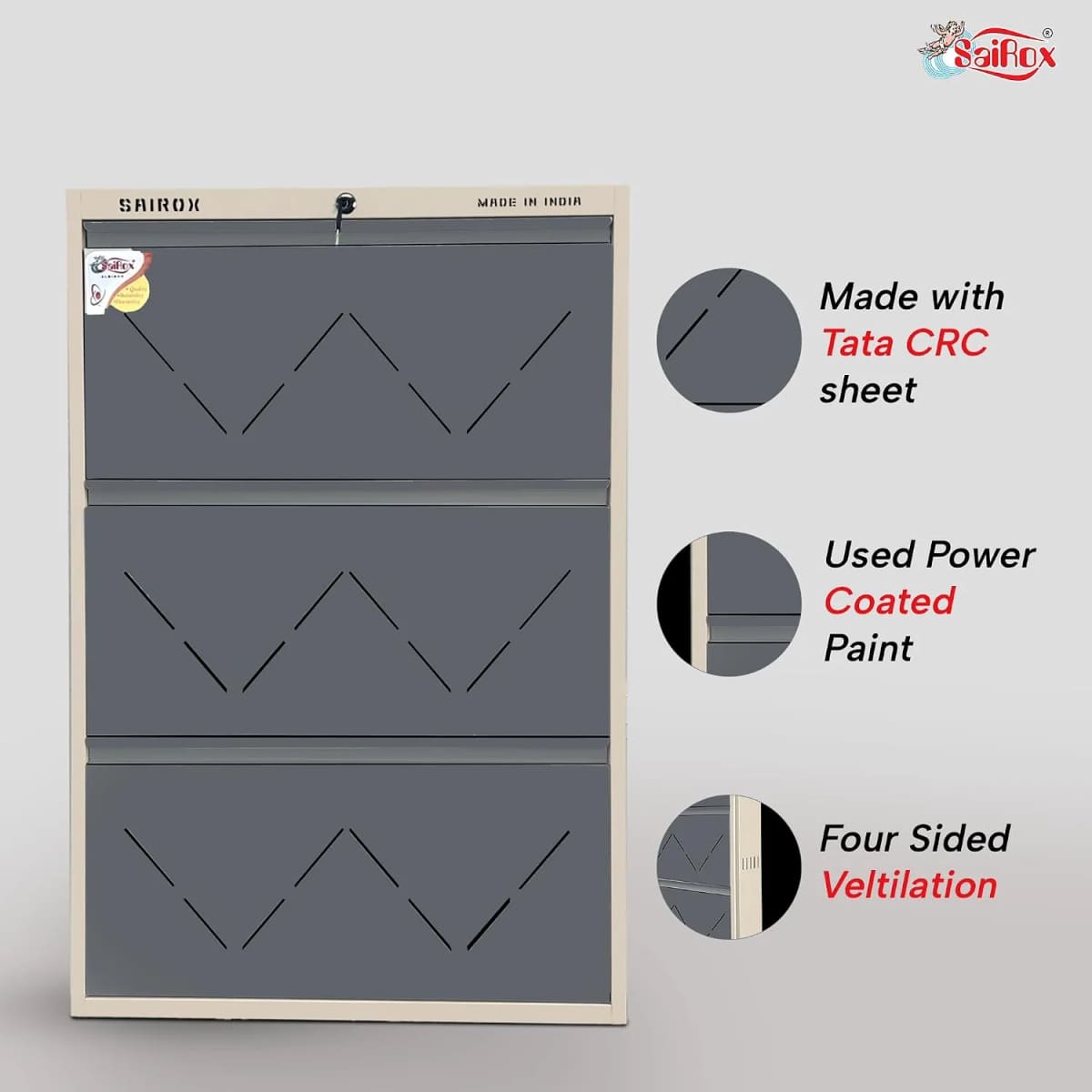
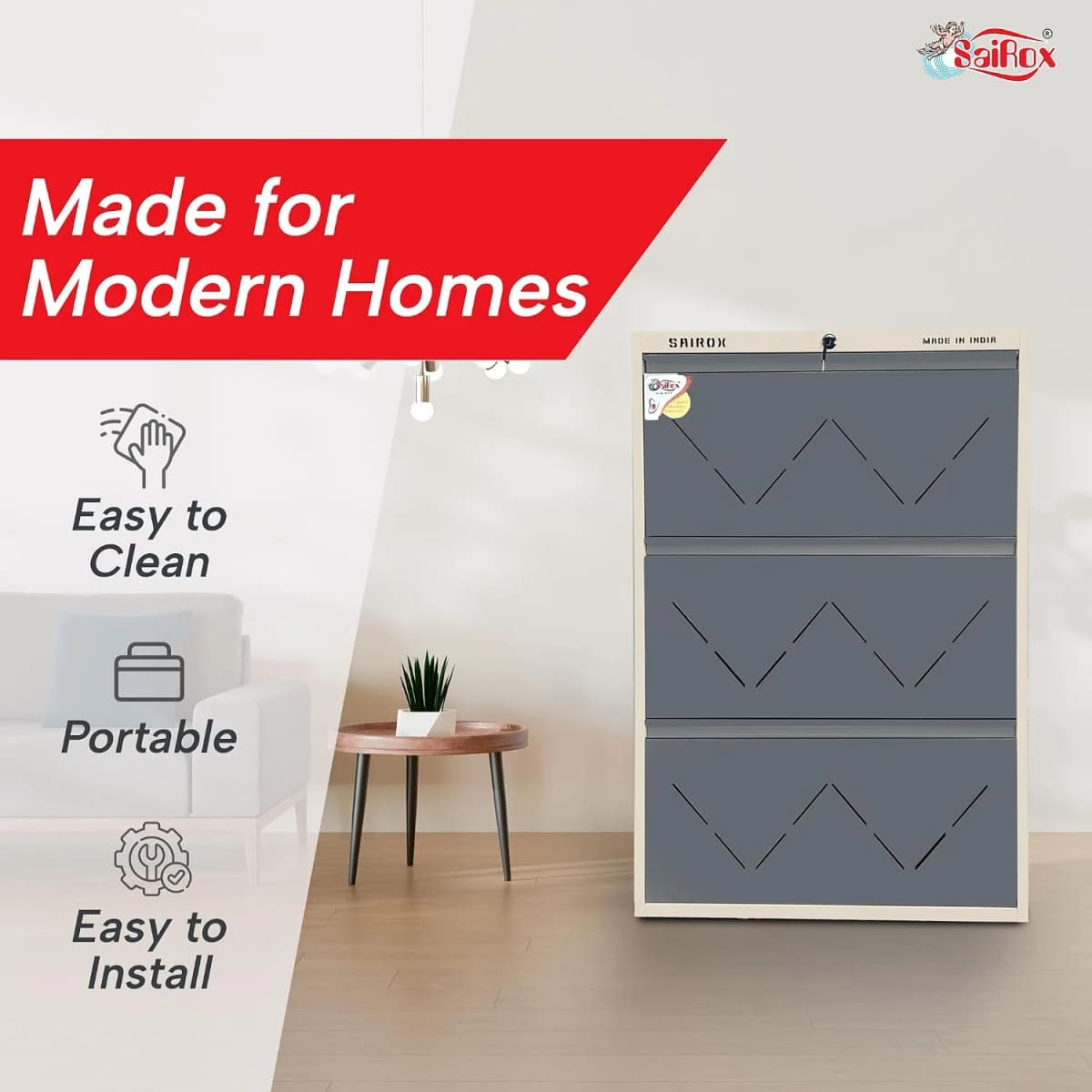
Wall-mounted metal shoe racks have tilt-out doors with shelves behind them. Because they're fixed to the wall, the floor underneath stays clear for sweeping and mopping — a big plus in homes that are swept daily. Powder-coated steel handles dust and damp well, and many models have a lock.
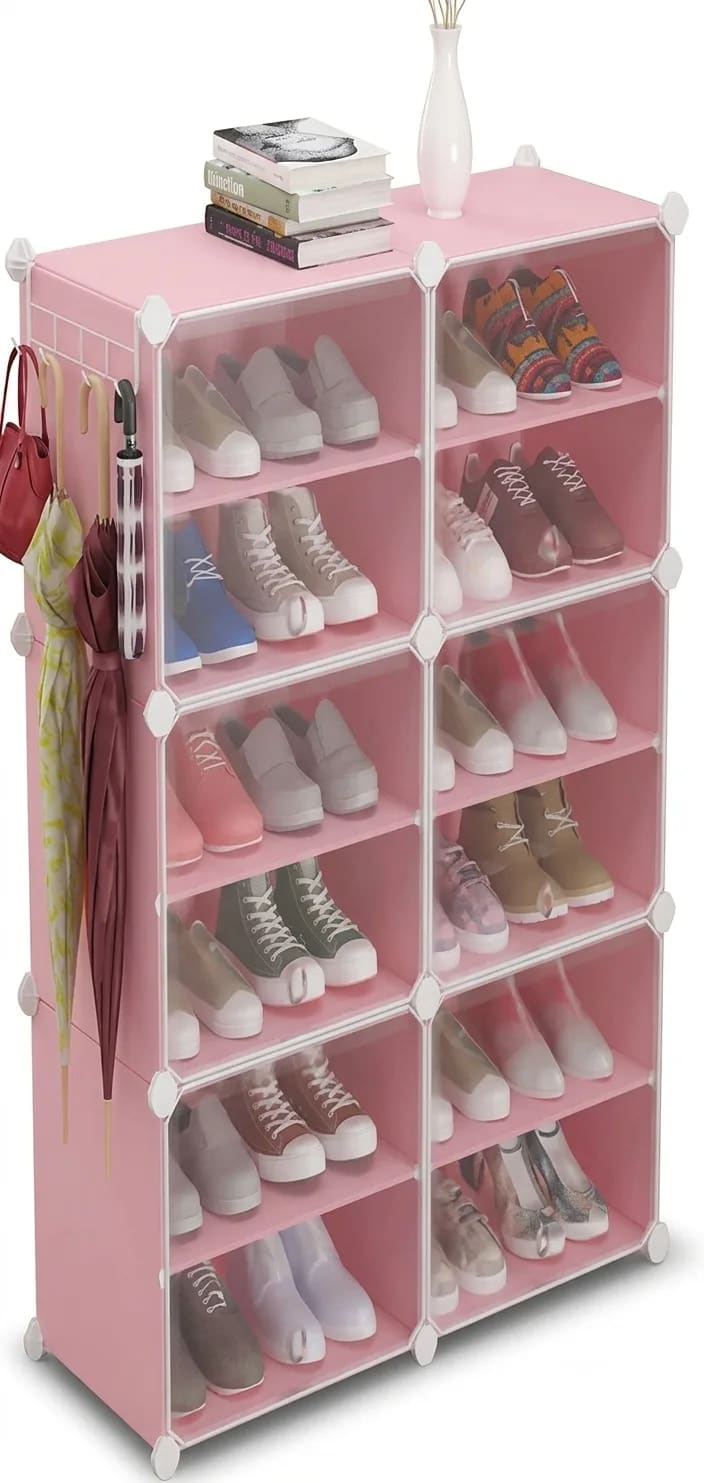
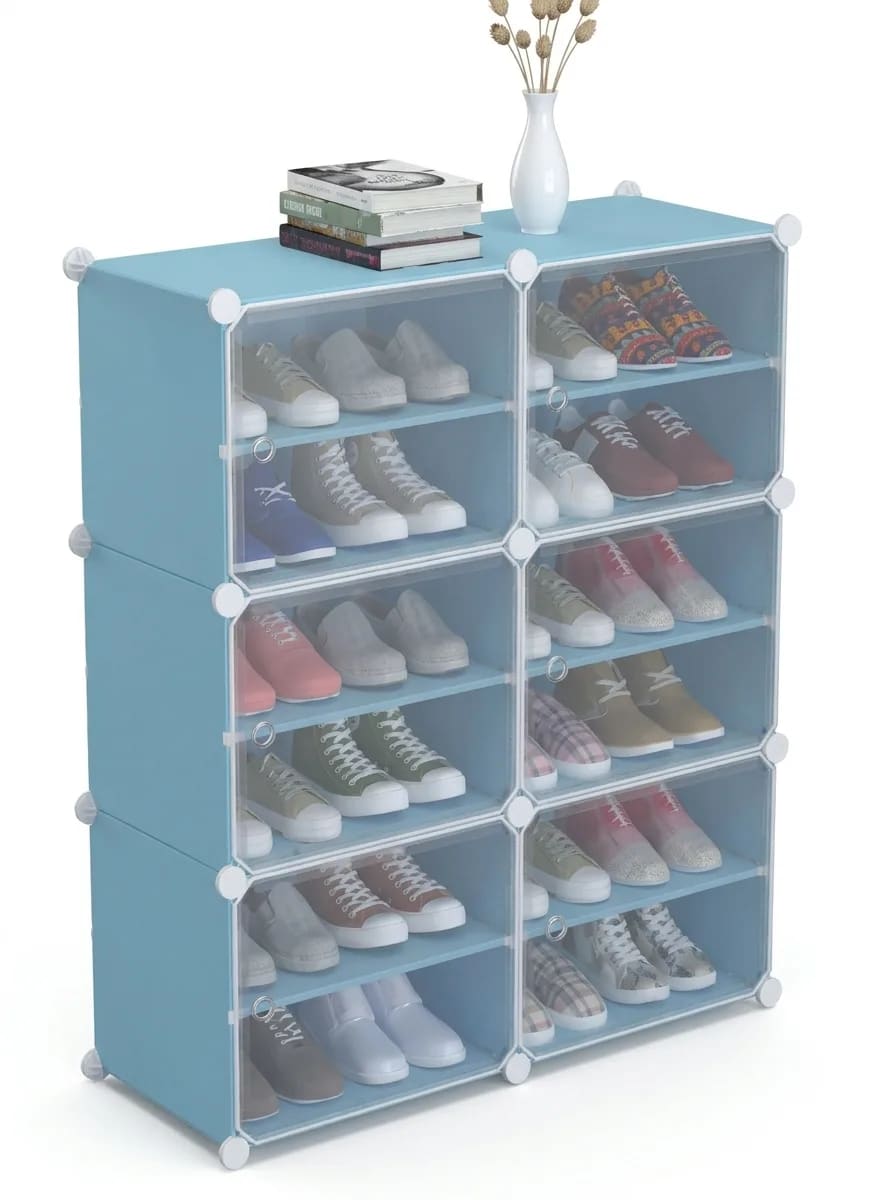
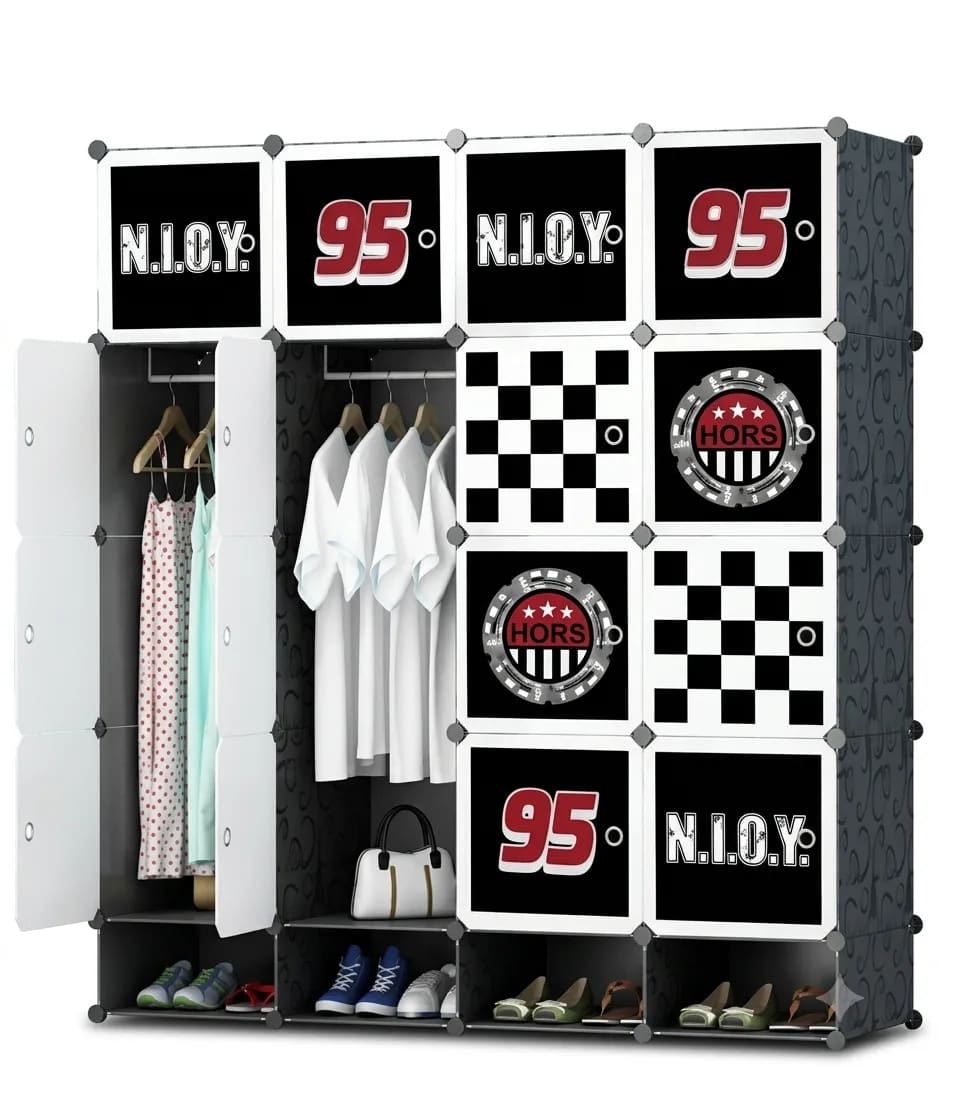
Free-standing foldable plastic cabinets need no drilling and no tools. They're light, easy to move, and good for renters, kids' rooms and spare rooms. They hold less weight than steel, so they suit lighter footwear and smaller collections.
- Choose wall-mounted metal for: large families, heavy daily use, outside-the-door placement, easy floor cleaning.
- Choose foldable plastic for: rented homes, small collections, kids' footwear, rooms where you may move the rack later.
Doors, ventilation and odour
Closed doors keep shoes out of sight and stop dust settling on them. But shoes need air: look for vents or perforated panels, and let damp shoes dry before putting them away during the monsoon. A box of baking soda or a few neem leaves on each shelf helps with smell.
Do you need a lock?
If the rack stands outside your main door or in a common corridor, a lock is worth having — it keeps good shoes from walking away. Inside the home, a lock matters less, though some families like it to keep small children from playing with the doors.
Installation tips for wall-mounted racks
- Fix it into a solid brick or concrete wall with proper wall plugs and screws, not into plaster alone.
- Mount it at a height where the top shelf is easy to reach and the doors clear the floor when they tilt open.
- Check for hidden electrical conduits or water pipes before drilling.
- Load the lower shelves with heavier shoes.
Quick checklist before you buy
- Wall width and depth measured, door swing checked
- Pair capacity covers your household plus a few spares
- Material suited to where it stands (steel for outside or heavy use)
- Vents for airflow
- Lock, if it stands outside the flat
- Wall-mounting fixings and a solid wall to fix them to